
Anchor Bank: Powering Financial Inclusion for Rural Women
- Alia Omer
- May 20, 2025
- 3 min read

Updated: May 30, 2025

Issued by: Government of Karnataka
Department: State Rural Livelihood Mission(SRLM)
Implementation Partner: The Nudge Institute – Indian Administrative Fellowship (IAF)
Organization: The Nudge Institute in partnership with Indian Administrative Services (2021–2023)
Location: Karnataka, India
Timeline: 2021–2023
Team: Worked in collaboration with state governments, financial institutions, and rural women’s collectives (with mentorship from Civil Servants)
Location: Karnataka, India
Project Brief & Context:
Women-led microenterprises are a key pillar of the state’s strategy to promote rural livelihoods and financial inclusion. However, systemic barriers—such as delayed credit disbursements, limited market linkages, and insufficient institutional support—continue to hinder the growth and sustainability of these enterprises.A lack of coordination between local banks, self-help groups (SHGs), and government schemes often results in operational delays and underutilization of financial services.
Objective:To design and implement a scalable mechanism that ensures faster, more efficient credit access for women entrepreneurs in rural Karnataka, while linking them to viable market opportunities and enterprise support systems.
Role: Program Strategist, Policy Design, Market Research, Financial Inclusion Partner. Community Mobilisation, Partnership mapping, Primary and Secondary research
Anchor Bank proposal:
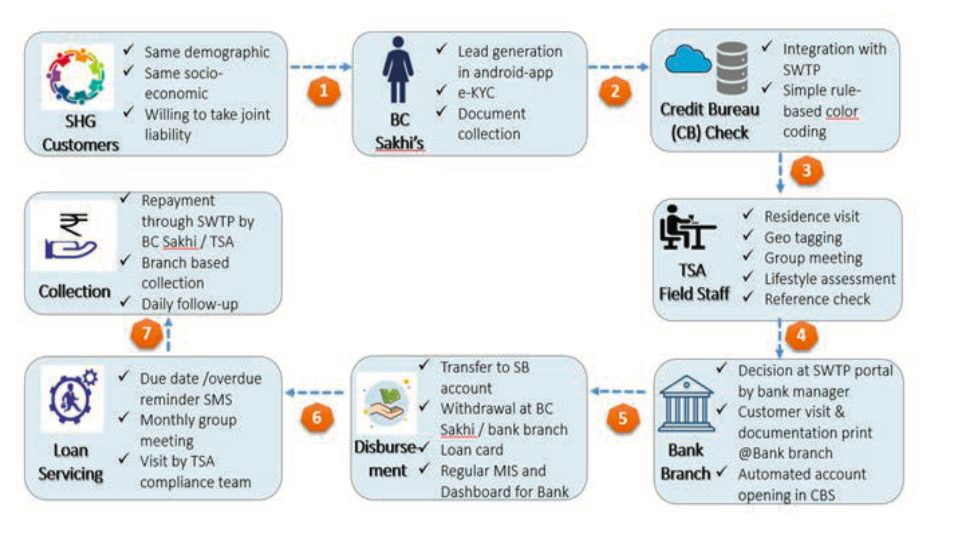
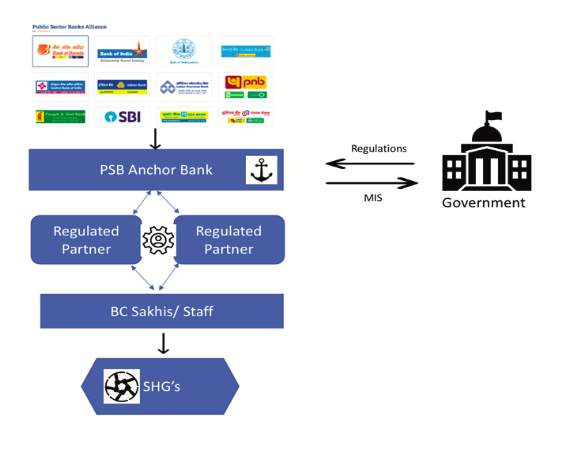
Anchor Bank is a tech-enabled credit model designed to boost financial inclusion for rural women by ensuring fair lending, faster disbursal, and verified data systems through public sector partnerships.

My role in this process:
Facilitate onboarding and usage among women with limited digital literacy
Surface stories of informal credit traps
Map local income trends, seasonal rhythms, and capacity gaps
Facilitate skill workshops and local microenterprise pilots
Observe credit behavior on the ground
Collect feedback loops to improve the model iteratively
Share impact stories from the ground to funders and partner.
Anchor Bank – Proposal Overview
The Anchor Bank model is a structured, tech-enabled intervention designed to enhance credit access, reduce disparities, and strengthen financial inclusion for rural women. Key features of the intervention include:
Regulated Interest Rates: Ensures fair and transparent lending for Self-Help Groups (SHGs) and their communities.
Scale of Impact: Direct benefits extended to over 30 lakh SHG women across Karnataka.
Job & Livelihood Creation: Structured support for income-generating activities among rural poor and marginalized women.
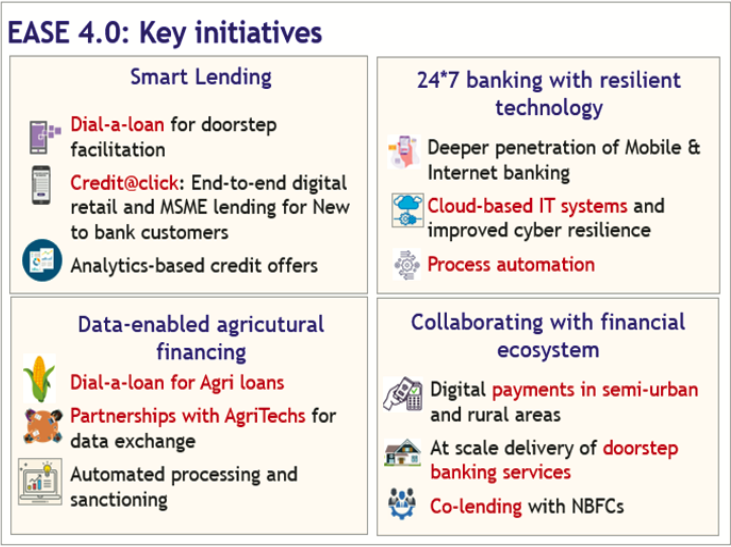
Digital Lending Infrastructure: Adoption of technology to reduce turnaround time for credit disbursement and minimize fraud.
Improved Monitoring: Better oversight of micro-credit extended to underserved and high-risk segments.
Verified Data Systems: Use of a single, authentic data source Public Sector Banking (PSB) Alliance partners to enhance transparency and operational efficiency.



Impact
The Anchor Bank model directly enabled the launch of 45,000+ women-owned enterprises across Karnataka through timely credit access. The economic ripple effects were felt at both household and community levels.
Our work earned public recognition from the Former Chief Minister of Karnataka and secured a dedicated a 500cr budgetary allocation in the 2023 state budget—a major policy win that institutionalized the solution.

Challenges Faced
Long delays in credit disbursement: Bureaucracy often caused weeks of waiting for loans to come through.
Financial exclusion: Many women lacked even basic banking access, let alone business credit.
Lack of structured support: Women entrepreneurs had the drive, but policies and systems didn’t back them up.
What I’d Do Differently
If I were to do this again, I’d invest earlier in capacity-building for local banks and officials, helping them adopt gender-sensitive approaches and reduce friction for first-time women borrowers.


Comments